Good health starts with a healthy environment
Although it is widely recognized that safeguarding air, soil, and water is essential for protecting both animal and human health, efforts to protect the environment remain insufficient.
The idea that human, animal, and environmental health are interconnected and interdependent can be traced back to Rudolf Virchow, who in the late 19th century observed the commonalities between human and animal diseases. William Osler and Calvin Schwabe made notable contributions in the 20th century, but it was only in the early 21st century that the term One Health began to appear explicitly in conferences and policy documents. This movement culminated in the report One Health Joint Plan of Action (2022–2026): Working Together for the Health of Humans, Animals, Plants and the Environment.
While official recognition of an approach that considers human, animal, and ecosystem health together is vital, the essential role of the environment should no longer come as a surprise. Significant attention is given to the impact of climate change on physical and mental health, but pollution deserves equal concern.

Credit: Witthaya Prasongsin/Moment/getty
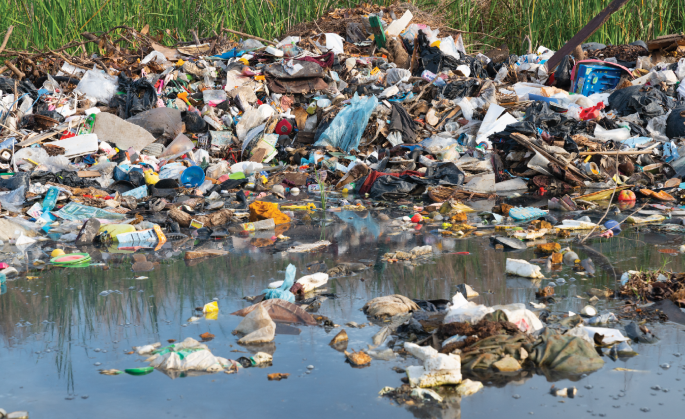
Take plastic as an example. Despite increasing reports of micro- and nanoplastics being detected in human organs, evidence of their direct harmful effects on human health remains limited. However, the omnipresence of plastic particles of all sizes in water, soil, and even air disrupts habitats where plants and animals live, affecting their health and reproduction. Ultimately, this impacts food production and water quality — both critical to human well-being.
A similar argument applies to antibiotic resistance genes. Pharmaceuticals released into the environment, often via wastewater, promote the development and spread of antibiotic resistance genes. This, in turn, compromises the effectiveness of these drugs in treating human infections.
Several papers in this issue of Nature Water underscore the importance of studying and protecting environmental quality as a crucial step in safeguarding human health. In their Comment, Onur Apul and colleagues highlight the role of the United States Environmental Protection Agency (EPA) in protecting public health since its inception in the 1970s. They emphasize the preventive benefits of clean air and water — not only in reducing premature deaths but also in preventing conditions such as asthma and mitigating the toxic effects of contaminants like arsenic and lead. Importantly, preventing disease significantly reduces public health costs. Considering the achievements made with limited EPA funding, the authors call for increased investment rather than the current trend of budget cuts.
In his Worldview, Jay Gan reflects on the multitude of contaminants dispersed in the environment through human activity and the challenges of neutralizing their toxic effects. He advocates for risk avoidance as a practical, sustainable strategy — implementing preventive measures such as selecting safer crops, timing wastewater use, and planting non-food vegetation in contaminated areas. Once again, the environment emerges as the focal point for preventing contaminants from entering the food chain and, ultimately, human and animal bodies.
Finally, in their Review, Melanie Kah, Laura Carter, and Susan Wilson explore the interconnections between soil and water, outlining the pathways through which soil contaminants affect water quality and pose risks to biodiversity, animal health, and human health. They argue for adopting a ‘One Environment approach’, treating soil and water as parts of a single system through which contaminants can transfer and transform.
Despite growing scientific evidence — and, to a large extent, simple common sense — that caring for the environment is key to preventing numerous diseases, society remains reluctant to prioritize investments in safeguarding our land, air, and water. Actions are often reactive, triggered by catastrophic events, and tend to be delayed and geographically limited. Achieving meaningful results requires a fundamental shift in mindset and commitment, starting with wealthy nations that produce most of the contaminants affecting the entire planet.
link