Everything You Need While You’re Straightening Your Teeth
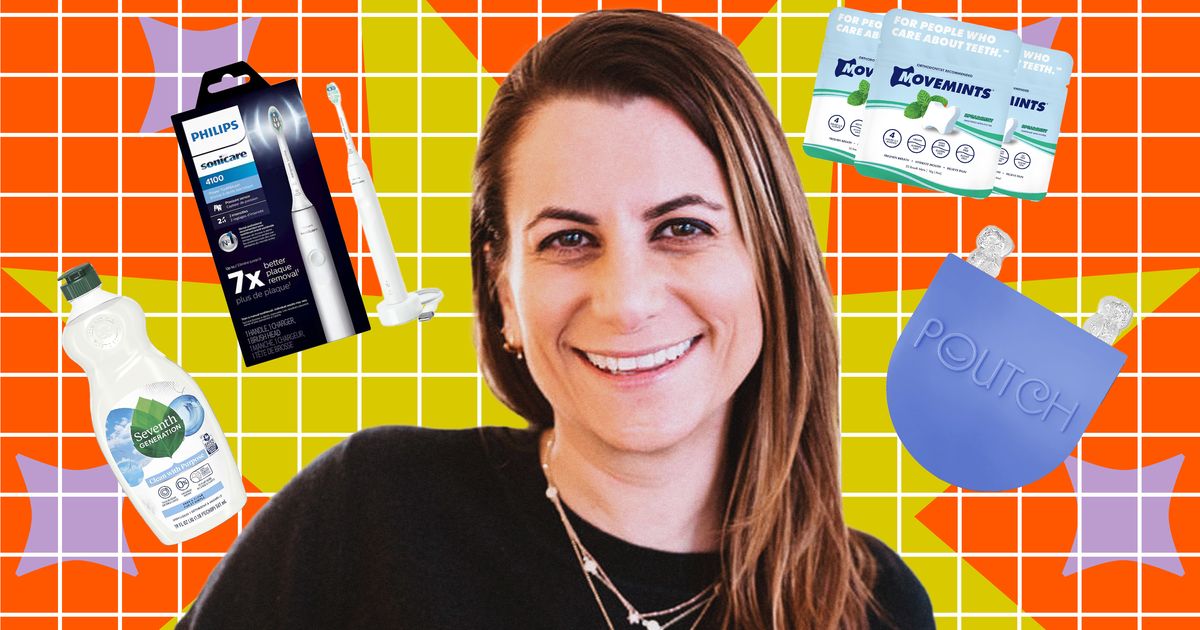

Photo-Illustration: The Strategist; Photo: Kaylee Lamoine, Retailers
Whether it’s talking through some odd new ingredient we’ve spotted or hashing out the current status of blush, Strategist beauty writers and editors make some of our best discoveries as a team. It all works so well that we decided to loop some of our favorite beauty experts into the conversation, too. In this roundtable series, we’ll be talking to the doctors, aestheticians, nail artists, and hairstylists we trust the most about their favorite products and best beauty advice. For this edition, Strategist senior editor Crystal Martin and Strategist beauty and personal-health writer Arielle Avila chatted with NYC-based orthodontist Dr. Jamie Royal about proper flossing techniques, the best (and cheapest) way to clean aligners, and her favorite toothbrush brand.
Arielle Avila, beauty writer, the Strategist: Let’s start with the basics of good oral hygiene: brushing your teeth. Is there an electric toothbrush that stands out to you?
Dr. Jamie Royal, orthodontist: Sonicare is the best electric-toothbrush company that’s out there in all capacities. My kids use their pediatric electric toothbrushes. Even their lowest-end model is an excellent brush. All around, I think that’s the gold standard of electric toothbrushes that’s out there. On the other end of the spectrum, the Quip brush is a relatively ineffective electric toothbrush. But it looks cool, so people like it.
Crystal Martin, senior editor, the Strategist: What makes it ineffective?
JR: It’s not that it’s an ineffective brush, but it’s a regular toothbrush with just a light vibration in the background. It’s as good as a regular toothbrush, but I don’t know if it’s any better than a standard manual toothbrush.
AA: And what makes Sonicare so effective?

Want to be emailed when products you’ve saved are over 20% off?
Success! You’ll get an email when something you’ve saved goes on sale.
Yes
JR: It has to do with the pulsing of the head and the level of vibration. We see a much higher level of overall hygiene with patients that use it as long as they use it effectively. Part of the problem in orthodontics is that it really just matters that you’re angling your brush the right way.
CM: Can you expand on that?
JR: Sure. Just having a manual toothbrush or an electric toothbrush isn’t going to solve your hygiene problem if you’re not angling it around your brackets with braces or attachments for Invisalign. You have to get into those nooks and crannies behind the brackets or attachments. In some cases, even a manual toothbrush is a little bit better in orthodontics, because you’re not trusting the brush to do it all. I’d rather see a patient use a manual toothbrush and get in everywhere than just hold an electric toothbrush on every tooth. I find sometimes, people with electric toothbrushes just expect it to get everything. But there’s a lot more nooks and crannies, especially with brackets. Sometimes, people get their braces off and they have these white halos on their teeth. That’s decalcification from plaque sitting on the bracket portion. If they’re just brushing this portion over the bracket and not getting up into this area between the bracket and the gums, that’s how decalcification happens. So having a good brush and covering our bases in terms of making sure patients know what they should be doing is super important.
CM: Does any of that apply to the attachments?
JR: Less so. There are less nooks for things to get stuck in. We’ll bevel attachments in different angles to get the right pressure points, but there’s not so many like with brackets. One of the best benefits of aligners is hygiene, in my opinion and in most dentists’ opinion, because aligners don’t have those nooks and crannies and you can brush normally and floss normally.
AA: On the topic of flossing, what are your thoughts on Waterpiks? I get recommended those a lot, especially for people with braces.
JR: I mean, truthfully, if you’re flossing, period, that’s good. So many people don’t floss, and it’s so important. A Waterpik isn’t a replacement for flossing, but it’s better than nothing, in my opinion. You just can’t get underneath the gums and physically scoop out plaque with a water flosser. It’s powerful and you can angle it under your gums and try to flush things out, but I don’t think it’s a replacement. Again, it’s about technique. Any floss is good as long as you’re again doing it the right way, You can’t just pop it between your teeth and pop it out. You have to go down along the side of your tooth and go down along the side of your tooth and scoop up. I just think people in general want something they can buy that’s going to have better results without putting in the work, but that’s not necessarily how it works. Same with electric toothbrushes.
AA: That totally makes sense. What about flossing between brackets, since that’s notoriously tricky? Do you have any tips?
JR: Because of the wire, you can’t floss normally. You can’t get down from the wire, so you need a floss threader, which literally looks like a needle and thread. But that is such a pain in the ass. I guarantee my patients don’t do that. I wouldn’t even do that. But there’s a brand called Platypus flossers that are amazing. They’re like the little flossers that kids use. The handle’s a wishbone shape and the floss across the top is made for braces. One side is much thinner, so it can actually fit between your tooth and the wire, so you can floss like normal between each tooth with braces on. They’re the bomb. We give them to every patient with braces.

Want to be emailed when products you’ve saved are over 20% off?
Success! You’ll get an email when something you’ve saved goes on sale.
Yes
AA: Switching to the topic of aligners. What’s with those vibrational devices that are supposed to speed up aligners? Do they work?
JR: Those came out maybe 15 years ago. The theory was that micro-vibration helps teeth move faster, like these micro vibrations. With aligners, patients were moving through trays faster. But then, people weren’t really seeing that big of a measurable change when they were using it with braces. Because there weren’t major measurable changes with braces, that reasoning kind of became debunked. Instead, they found that the reason it worked with aligners wasn’t the vibration itself, but that it helped seat the aligners onto your teeth better. If you have a better fit of the aligners, the pressure points on the aligners are touching your tooth at a very specific place versus if the aligner isn’t seated all the way down over your teeth, causing less efficient movement.
I used them for years with patients, but $500 was a pretty high price point to accelerate treatment. What we started doing instead was giving away chewies. Some people use suction tips. But these chewies are these little things you’d gnaw on — almost like a chew toy — with your aligners in that helps to seat the aligners. There’s also this company called Movemints that we use in my office a lot. I think they’re a nice thing to get patients. They’re minty, and you can’t have very many things with your aligners in. They’re sort of concave on both sides so that you can bite into it, helping your aligners fit better.

Want to be emailed when products you’ve saved are over 20% off?
Success! You’ll get an email when something you’ve saved goes on sale.
Yes

Want to be emailed when products you’ve saved are over 20% off?
Success! You’ll get an email when something you’ve saved goes on sale.
Yes
AA: What about cleaning aligners? Do those ultrasonic cleaners work?
JR: I don’t think they’re necessary, but I do think they work. You need to buy one at a good price point. Dental pods by Zima are really good. There are some cheap ones that I just don’t think do enough. But those definitely work.

Want to be emailed when products you’ve saved are over 20% off?
Success! You’ll get an email when something you’ve saved goes on sale.
Yes
AA: Are there any cheaper alternatives?
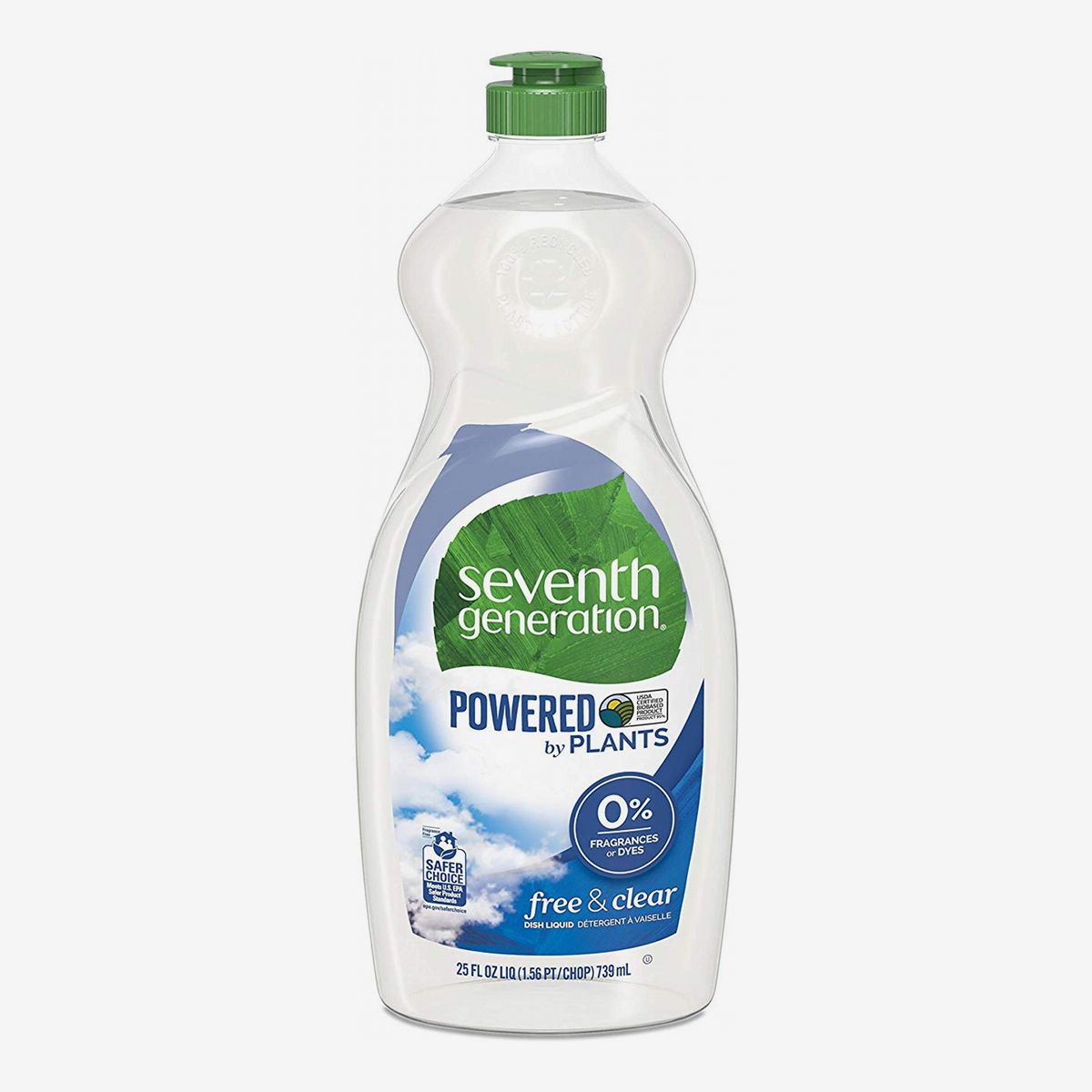
JR: Honestly, dish soap is awesome. Dish soap keeps them so clean. Toothbrush and toothpaste is fine, but there’s some research that shows that when you brush toothpaste into your aligners, you’re sort of abrading the aligner. It creates these micro-perforations that can harbor bacteria. We still tell patients they can do it. I don’t think it’s bad, but that’s why some people say not to do that. Any denture cleaner is kind of the same. It might make some micro-perforations, but we still recommend it. There’s also this solution called Steraligner. It doesn’t create micro-perforations. It’s a more gentle cleaning material.
AA: But if someone doesn’t want to buy a whole new product, you’d say dish soap is as good as those solutions?
JR: Yeah. It seems to be the most sparkling-clean aligners that come into my office are consistent with patients that just brush them with dish soap.
Want to be emailed when products you’ve saved are over 20% off?
Success! You’ll get an email when something you’ve saved goes on sale.
Yes
AA: Wow, that’s surprising.
JR: I know. We sort of changed our tune a little bit, but it seems to be the most gentle and keeps it clean. If you think about it, you clean your cups and forks and everything with that, so it’s definitely hygienic, and it’s used for things that go in your mouth anyway.
AA: Yeah, that’s true. And how often would you say people should clean their aligners or retainers?
JR: Morning and night is really kind of like the minimum. Technically, you should clean them before you put them in after a meal. We also say half hydrogen peroxide, half water is a good thing to soak them in if you were sick, if you had strep throat, or anything like that. You just don’t want to use liquids that are too warm. You definitely don’t want to boil them. Using anything hot can distort or melt the aligners.
AA: Any last tips?
JR: The only other thing to touch on would be that people lose their aligners. We tell patients that you only keep them in your face or in your case. You never want to wrap them in a napkin or just leave them out. There’s this cool brand called Poutch that has a sticky back, so you can put it on the back of your phone, your pocket book, or purse. It’s great for kids because they never don’t have their phones. That way, they’ll never lose them.

Want to be emailed when products you’ve saved are over 20% off?
Success! You’ll get an email when something you’ve saved goes on sale.
Yes
CM: Okay, final thing: I’ve heard murmurings that retainers are for life. Please tell me that’s not true.
JR: Ha, yes, it’s really for life — or as long as you want to keep your teeth straight. But retention plans are a little customizable. (Doctors have differing protocols they recommend.) Typically, it’s only at night and tapers down to a few nights a week.
See All
The Strategist is designed to surface useful, expert recommendations for things to buy across the vast e-commerce landscape. Every product is independently selected by our team of editors, whom you can read about here. We update links when possible, but note that deals can expire and all prices are subject to change.
link