Concerns linger over environmental and health impacts following UPS plane crash
UPDATE 11/7/2025: The EPA has joined the crash response and began assisting the Kentucky Department of Environmental Protection with oil and volatile compound cleanup.
They have also conducted water sampling and air monitoring.
The EPA will remain on site to help ensure clean air, land, and water for nearby residents.
The EPA’s comprehensive incident response page athttps://www.epa.gov/ky/UPSFlight2976 contains detailed information about the crash, ongoing remediation efforts, environmental monitoring results, and public safety updates. This page will be updated as the response progresses.
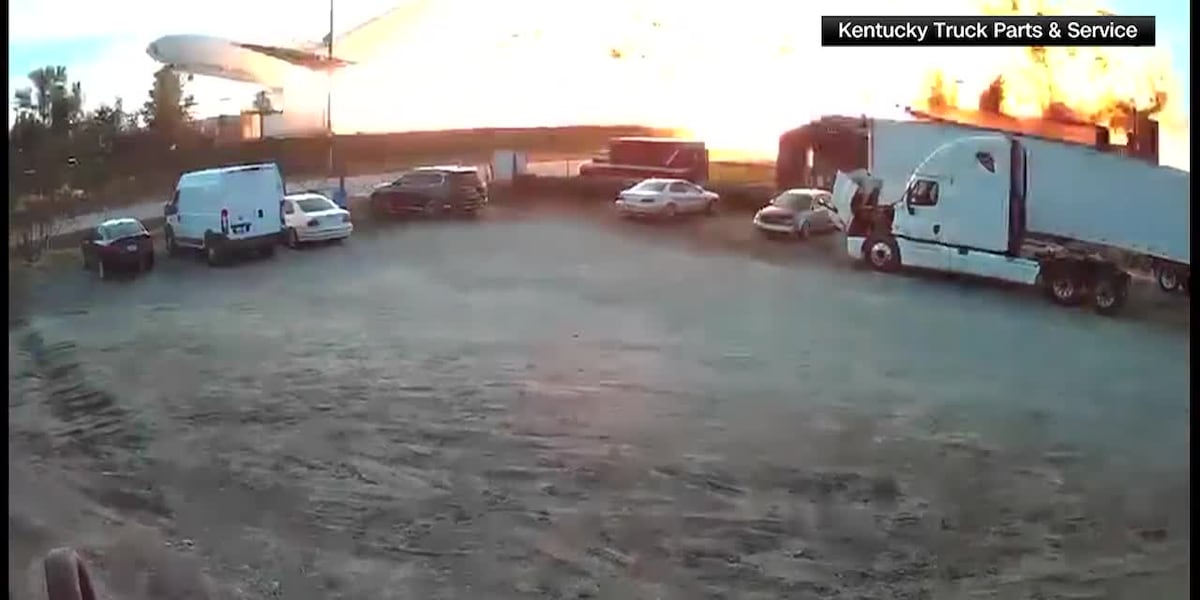
LOUISVILLE, Ky. (WAVE) – The investigation into Tuesday’s UPS plane crash is preparing to enter into its first full day on Thursday.
Though the smoke has since cleared, concerns hang in the air over public health and environmental safety.
Flames from the incident caused pieces of debris to be cast from the site, including what witnesses described as charred pieces of mail.
Law enforcement advised that anyone who finds debris from the crash avoid touching it and report it on the Louisville Metro Government website.
Mapping out the location of the debris found could help investigators identify affected areas outside of the direct or visible path of the plume of smoke, where chemical testing or cleanup may be necessary.
University of Louisville medical professor and director of the Division of Environmental Medicine Dr. Aruni Bhatnagar tells WAVE that while the shelter in place order was intended to mitigate potential harm from immediate exposure to smoke, the full picture of its effects are still unclear.
“Any type of smoke is problematic because it contains particles that are harmful to health, but this may have other components of other different types of chemicals,” he noted.
Bhatnagar said his primary concern is that the chemicals released by the incident are more complicated than a standard fire.
In an initial press conference Tuesday night, Governor Andy Beshear confirmed that there were no toxic materials within the cargo on board flight 2976.
However, plastics and metals in the body of the plane or cargo, as well as the 30,000 gallons of jet fuel and materials from the petroleum recycling plant all have the capability to produce toxic byproducts when burned, contributing to the hazardous nature of the smoke.
Combustion of kerosene jet fuel alone is known to produce a number of toxic chemicals including volatile organic compounds (VOCs) toluene and benzene, polycyclic aromatic hydrocarbons (PAHs), dioxins, and particulate matter.
These chemical byproducts have the ability to cause negative health impacts a person is exposed to them in irregular quantities, ranging from respiratory irritation, to increased risk of long-term illnesses.
That’s why Bhatnagar says it’s essential for crews investigating the disaster to identify where the soot may have settled, and test for contaminants over the coming days and weeks.
“This soot and ash is going to be lying there and it’s going to be blown away a little but so we need to be careful what’s happening and how that’s being contained,” he said. “So there needs to be some surveillance and monitoring to make sure that the levels are okay.”
At this time, it’s unclear whether the EPA or similar crews will be deployed to the site for chemical testing and monitoring.
In addition to avoiding physical contact with any physical pieces of debris, Bhatnagar added that a lingering ‘burnt’ smell can be an indicator of the presence of chemical residue and soot. In that case, it’s a good idea to wear a face covering and limit direct exposure to that air.
When reached for comment, Louisville Water clarified that residents in the area of service should not be concerned over any water contamination or quality issues as a result of Tuesday’s incident, unless otherwise notified directly by the company.
The statement reads: “Like everyone else, our thoughts are with all those affected by this tragedy.
Public health is at the core of the work Louisville Water does every day. The tap water is safe for the majority of the nearly one million people we provide drinking water daily.
We issued a Consumer Advisory Notice for approximately 50 customers in a largely commercial area near the crash site. We have worked to personally notify those customers.
Louisville Water is involved in the emergency response. Our crews spent the day doing water quality sampling, inspecting water mains, and checking fire hydrants in the impacted area. We will continue to test the water to ensure the quality remains safe for our customers.”
Additional information on water quality and answers to frequently asked questions can be found on LouisvilleWater.com.
Copyright 2025 WAVE. All rights reserved.
link